HRMS Software in India: A Technical & Strategic Guide for Scalable Workforce Management (2026)
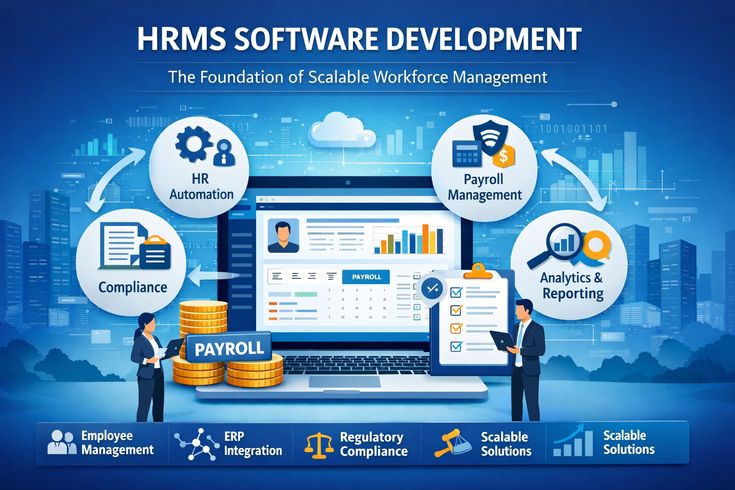
As organizations scale, managing human resources manually becomes inefficient, error-prone, and operationally expensive. In technology-driven business environments like Pune, Mumbai, and across India, companies are increasingly adopting hrms software to automate, centralize, and optimize workforce management.
However, most businesses treat HRMS as a basic HR tool. In reality, a well-implemented hrms system acts as a core operational infrastructure layer, integrating HR, payroll, compliance, analytics, and performance management into a unified digital framework.
This guide explains HRMS from a technical and system architecture perspective, helping businesses understand how to implement it correctly for long-term scalability.
What Is HRMS Software: Beyond Basic HR Automation
The hrms full form is Human Resource Management System. While traditionally associated with payroll and attendance, modern HRMS platforms are modular enterprise systems designed to manage the entire employee lifecycle.
A robust HRMS includes:
- Employee data management
- Payroll processing engines
- Attendance & leave tracking systems
- Performance management modules
- Compliance automation
In high-growth environments, HRMS becomes the single source of truth for workforce data, reducing dependency on fragmented tools. Pairing HR operations with LMS platforms closes the loop between people data and structured learning journeys.
Technical Architecture of an HRMS System
A modern hrms system is built on layered architecture:
- Data Layer
Stores employee records, payroll data, attendance logs, and compliance data. Typically structured using relational databases or cloud-based storage systems.
- Application Layer
Handles logic for payroll calculations, leave policies, performance metrics, and reporting engines.
- Integration Layer
Connects HRMS with:
- Accounting systems
- ERP platforms
- CRM tools
- Biometric devices
- Government compliance portals
- User Interface Layer
The hrms dashboard and user portals that provide real-time insights and interaction capabilities.
This layered structure ensures scalability, flexibility, and security.
HRMS Online: Cloud-Based vs On-Premise Systems
The shift toward hrms online platforms has transformed HR operations. Cloud-based HRMS solutions offer:
- Real-time access from anywhere
- Automatic updates and scalability
- Reduced infrastructure cost
- API-based integrations
On-premise systems, while offering control, are now less preferred due to maintenance overhead and limited scalability.
For startups and SMEs in Pune and Mumbai, cloud HRMS is typically the most practical choice. Custom integrations often sit alongside broader software development initiatives.
Core Functional Modules in HRMS Software
A technically sound hrms software in india includes multiple interconnected modules:
- Employee Information System (EIS)
- Payroll Engine (Tax, deductions, compliance rules)
- Attendance & Time Tracking Module
- Leave Management System
- Performance & Appraisal Module
- Recruitment & Onboarding System
Each module interacts with others through APIs or internal data pipelines, ensuring seamless workflow automation.
HRMS Dashboard: Data-Driven Decision Making
The hrms dashboard is not just a reporting interface it is a decision-making tool. It provides real-time insights such as:
- Employee attendance trends
- Payroll expenses
- Attrition rates
- Performance analytics
Advanced dashboards integrate analytics and visualization layers, enabling HR teams and leadership to make data-backed decisions.
Compliance Automation in HRMS Systems
One of the most critical aspects of HRMS is compliance. In India, businesses must comply with multiple regulations such as:
- PF (Provident Fund)
- ESIC
- TDS deductions
- Labour laws
A technically advanced HRMS automates compliance calculations and generates statutory reports, reducing manual errors and legal risks.
Cost and Implementation Considerations
HRMS implementation cost depends on:
- Number of employees
- Level of customization
- Integration requirements
- Deployment model (cloud vs on-premise)
However, the ROI is significant. Businesses reduce administrative workload, improve accuracy, and enhance employee experience.
For example, a mid-sized company in Mumbai reduced payroll processing time by 60% after implementing a cloud-based HRMS.
Real Business Scenarios: HRMS Impact
A startup in Pune implemented HRMS early and scaled from 10 to 100 employees without increasing HR overhead.
An SME adopted HRMS for compliance automation, reducing penalties and audit risks.
In contrast, companies relying on spreadsheets often face data inconsistencies and compliance errors.
Common Technical Mistakes in HRMS Implementation
Many businesses fail not because of the software, but due to poor implementation strategy:
- Choosing tools without scalability
- Ignoring integration requirements
- Lack of data migration planning
- Poor user adoption
HRMS should be implemented as an enterprise system, not just an HR tool.
Why Strategic Implementation Matters
Technology alone does not solve problems correct implementation does. Businesses must align HRMS with workflows, policies, and growth plans.
At Febstone, HRMS implementation is approached through:
- Business process mapping
- System architecture planning
- Compliance alignment
- Integration strategy
For organisational change and stakeholder communication, aligning with digital marketing and internal comms improves rollout adoption.
Tech consulting helps validate vendor shortlists, data models, and security before you scale headcount.
Conclusion
Hrms software is a foundational system for modern organizations. From workforce management to compliance automation and analytics, it enables businesses to operate efficiently at scale.
For startups, SMEs, and enterprises across Pune, Mumbai, and India, adopting a structured HRMS approach is no longer optional it is essential.
With Febstone's consulting-led approach, businesses gain not just software implementation, but a scalable HR infrastructure built for long-term growth.
Get Expert HRMS Implementation Support
Email: info@febstone.com
Our experts help you design, integrate, and scale HRMS systems aligned with your business operations.
FAQ
1. What is HRMS software?
HRMS software is a system used to manage employee data, payroll, attendance, and HR operations digitally.
2. What is HRMS full form?
HRMS stands for Human Resource Management System.
3. What is HRMS dashboard?
It is a real-time interface that provides analytics and insights related to HR data.
4. What is HRMS online system?
It is a cloud-based HRMS platform accessible remotely with real-time updates.
5. Why is HRMS important for businesses?
It improves efficiency, ensures compliance, and supports scalable workforce management.