LMS Software in India: A Strategic Consultant's Guide for Businesses, Startups & Learning Platforms (2026)
As organizations move toward digital-first operations, training and knowledge management have become strategic priorities. Whether it is employee onboarding, skill development, compliance training, or customer education, businesses across Pune, Mumbai, and other major Indian cities are increasingly adopting lms software to streamline and scale learning.
However, most businesses still view LMS as a tool rather than a system that directly impacts productivity, retention, and performance. This is where the gap lies. Implementing the right learning infrastructure is not about software selection alone it is about aligning training with business outcomes.
This guide explains how LMS works, why it is critical for modern organizations, and how businesses can strategically implement a learning management system for long-term impact.
What Is LMS Software and Why It Matters
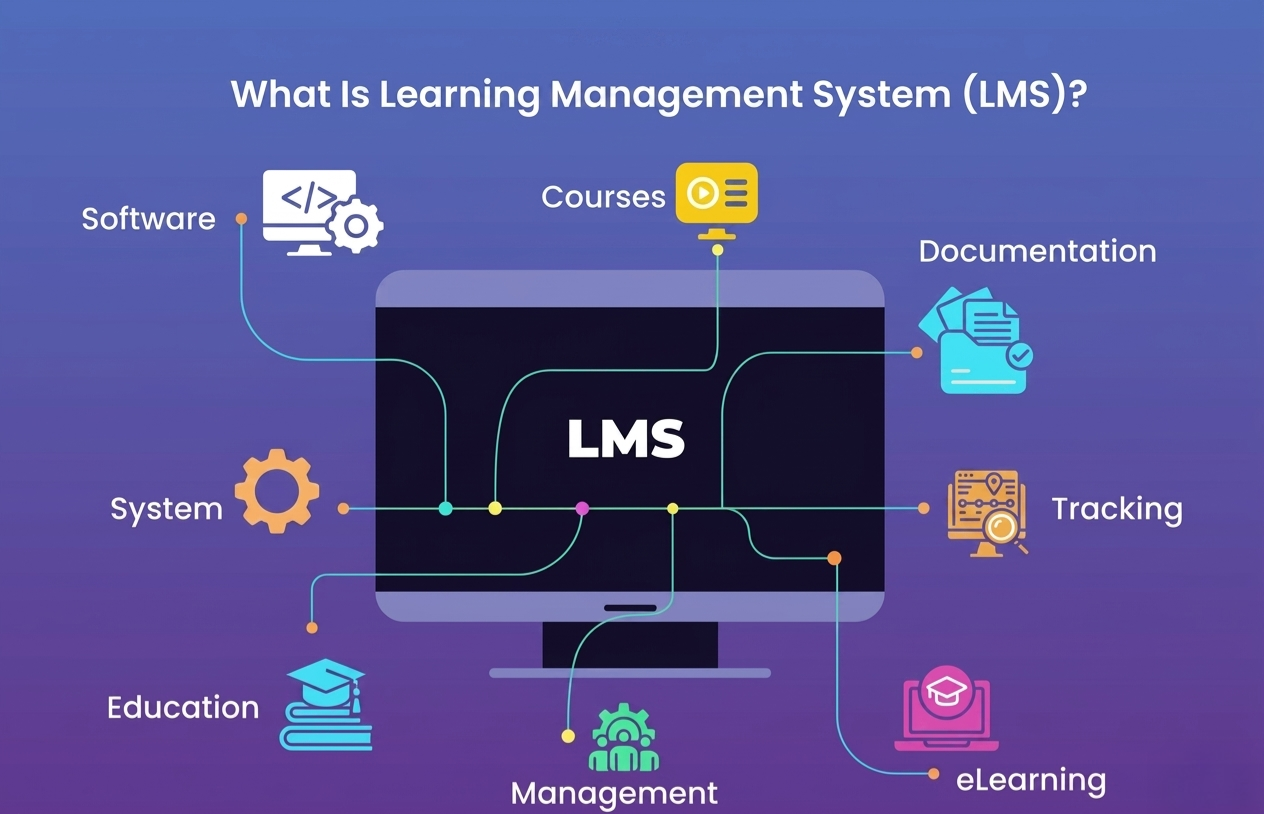
The lms full form is Learning Management System. At a basic level, it is a digital platform used to create, manage, deliver, and track training programs. But in practice, LMS software is much more than content delivery it is a centralized knowledge ecosystem.
Organizations use LMS platforms to:
- Train employees efficiently
- Standardize onboarding processes
- Track learning progress
- Improve workforce performance
In cities like Pune, where startups scale rapidly, and Mumbai, where enterprises operate at large scale, LMS adoption is no longer optional it is becoming essential.
LMS often sits alongside broader product and platform work—see our guide on software development services in India for how custom learning experiences and integrations are built.
Understanding the Learning Management System in a Business Context
A learning management system is not just an HR tool. It plays a critical role in operational efficiency. For example, a sales team trained through a structured LMS performs better because knowledge is consistent and measurable.
Similarly, service-based businesses can use LMS to train teams on processes, ensuring uniform service delivery. For startups, LMS reduces dependency on manual training and enables faster team scaling.
For external visibility and learner engagement programs, digital marketing can complement how training brands and academies attract and retain audiences.
LMS eLearning: The Shift from Traditional Training
The rise of lms elearning has transformed how organizations deliver knowledge. Traditional training methods classroom sessions, PDFs, or manual onboarding are inefficient and difficult to scale.
eLearning through LMS enables:
- On-demand learning
- Remote accessibility
- Self-paced training
- Consistent knowledge delivery
For example, a growing startup in Pune replaced manual onboarding with LMS-based training modules, reducing onboarding time by 40% and improving employee productivity within the first month.
Key Features of a Modern LMS Platform
A strong lms platform includes features that go beyond content hosting. Businesses should look for systems that offer structured learning paths, analytics, integrations, and user management.
The lms dashboard is particularly important, as it provides real-time insights into user engagement, course completion rates, and performance metrics. These insights help businesses refine training strategies and improve outcomes.
Additionally, integration with HR systems, CRM tools, and analytics platforms ensures that LMS becomes part of the broader business ecosystem rather than a standalone tool.
Types of Learning Management System Tools
Different learning management system tools are designed for different use cases. Some focus on corporate training, while others cater to educational institutions or online course creators.
Cloud-based LMS solutions are widely preferred due to scalability and accessibility. On-premise systems offer more control but require higher maintenance.
Choosing the right tool depends on:
- Business size
- Training goals
- Budget
- Technical capabilities
A strategic approach ensures that the LMS aligns with both current needs and future growth. Startup consulting and technology advisory can help map vendors, integrations, and rollout plans to your operating model.
Cost Considerations in LMS Implementation
LMS costs vary based on features, customization, and user scale. Basic platforms are cost-effective but may lack advanced analytics or integrations. Custom-built LMS systems provide flexibility but require higher investment.
However, the real cost consideration is ROI. Businesses that implement LMS strategically often reduce training costs, improve efficiency, and enhance employee retention.
For example, an SME in Mumbai reduced repeated training sessions and saved operational costs after implementing a structured LMS system.
Real Business Scenarios: LMS in Action
A corporate firm in Pune implemented LMS to standardize compliance training across departments. This reduced errors and improved audit readiness.
A service-based startup used LMS to train remote teams, ensuring consistent service quality across cities.
In contrast, a company that adopted LMS without clear structure struggled with low engagement because content was not aligned with user needs.
These scenarios highlight that LMS success depends on strategy not just software.
Common Mistakes Businesses Make with LMS
Many organizations invest in LMS but fail to use it effectively. Common mistakes include:
- Lack of structured content
- Poor user engagement
- No performance tracking
- Choosing tools without scalability
LMS should be implemented as a long-term system, not a one-time setup.
Why Businesses Need Strategic LMS Implementation
Implementing LMS without a clear roadmap leads to underutilization. Businesses need to align LMS with training goals, performance metrics, and operational workflows.
At Febstone, LMS solutions are approached from a business consulting perspective, ensuring that technology supports measurable outcomes.
Conclusion
Lms software is no longer just a training tool it is a strategic asset for modern businesses. From improving employee productivity to scaling knowledge systems, LMS plays a critical role in business growth.
For startups, SMEs, and enterprises across Pune, Mumbai, and India, adopting a structured LMS approach can significantly enhance operational efficiency.
With Febstone's expertise in technology consulting, implementation, and strategy, businesses can transform LMS from a tool into a growth enabler.
Get Expert LMS Implementation Support
Email: info@febstone.com
Our consultants help you design, implement, and scale LMS solutions aligned with your business goals.
FAQ
1. What is LMS software?
LMS software is a platform used to manage, deliver, and track training programs digitally.
2. What is the full form of LMS?
The lms full form is Learning Management System.
3. What are LMS tools used for?
They are used for employee training, onboarding, compliance learning, and skill development.
4. What is LMS eLearning?
It is digital learning delivered through an LMS platform.
5. How to choose the right LMS platform?
Choose based on features, scalability, integrations, and business requirements.